
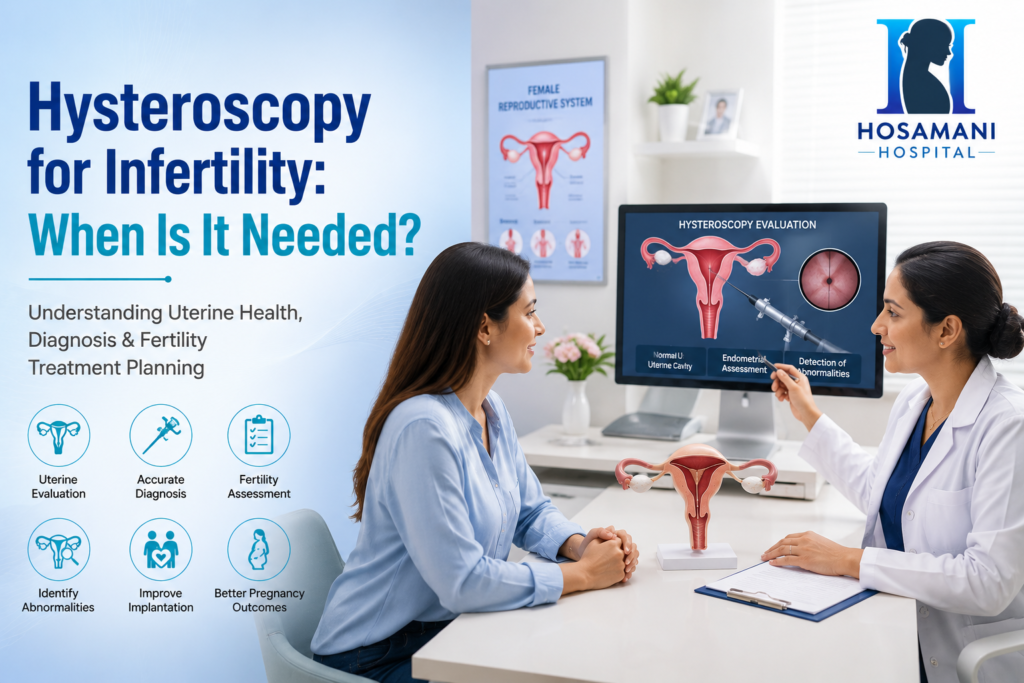
Hysteroscopy for Infertility When Is It Needed and Why Guide helps women understand an important procedure used in fertility care. When pregnancy does not occur despite regular attempts, doctors may recommend hysteroscopy to examine the uterus. Moreover, this procedure helps identify conditions that may affect implantation or pregnancy. Therefore, understanding when hysteroscopy is needed can help women make informed fertility decisions.
What Is Hysteroscopy for Infertility and How Does It Work?
Hysteroscopy for Infertility is a minimally invasive procedure that allows doctors to view the inside of the uterus using a thin instrument called a hysteroscope.
The procedure helps specialists:
• Examine the uterine cavity
• Detect abnormalities
• Identify implantation issues
• Evaluate fertility concerns
• Plan appropriate treatment
As a result, doctors can better understand factors affecting fertility and pregnancy.
Understanding the Diagnostic Hysteroscopy Procedure
The Diagnostic Hysteroscopy Procedure is usually performed as an outpatient procedure. A small camera is gently inserted through the cervix to examine the uterus.
The procedure may help identify:
• Uterine polyps
• Fibroids
• Scar tissue
• Congenital abnormalities
• Endometrial problems
Furthermore, the procedure is generally safe and provides valuable information for fertility planning.
When Is Hysteroscopy for Infertility Recommended?
Hysteroscopy for Infertility When Is It Needed and Why Guide.Doctors may recommend hysteroscopy when fertility investigations suggest possible uterine problems. Additionally, it may be advised before advanced fertility treatments.
Common situations include:
• Repeated IVF failure
• Recurrent miscarriage
• Abnormal ultrasound findings
• Unexplained infertility
• Irregular uterine bleeding
Consequently, hysteroscopy helps identify conditions that may otherwise remain undetected.
Common Uterine Abnormalities and Infertility Problems
Several Uterine Abnormalities and Infertility issues can interfere with successful pregnancy.
These conditions may include:
• Endometrial polyps
• Fibroids inside the uterus
• Uterine adhesions
• Septate uterus
• Endometrial abnormalities
Moreover, treating these conditions may improve fertility outcomes and increase the chances of conception.
How Does Hysteroscopy and Fertility Treatment Improve Pregnancy Chances?
Hysteroscopy and Fertility Treatment often work together to improve reproductive outcomes. By identifying and treating uterine abnormalities, doctors can create a healthier environment for embryo implantation.
Benefits include:
• Improved uterine health
• Better implantation potential
• Reduced miscarriage risk
• Accurate diagnosis
• Personalized fertility planning
Therefore, hysteroscopy can play an important role in fertility management.
Benefits of Hysteroscopy Before IVF Treatment
Hysteroscopy for Infertility When Is It Needed and Why Guide.Many fertility specialists recommend Hysteroscopy Before IVF in selected patients.
The Benefits of Hysteroscopy before IVF may include:
• Detecting hidden uterine abnormalities
• Improving embryo implantation conditions
• Supporting treatment planning
• Reducing unexpected complications
• Increasing treatment confidence
Furthermore, identifying and correcting uterine issues before IVF may contribute to improved outcomes.
What Should Patients Expect During and After Hysteroscopy?
Hysteroscopy for Infertility When Is It Needed and Why Guide.Most women tolerate hysteroscopy well. Additionally, recovery is usually quick and uncomplicated.
Patients may experience:
• Mild cramping
• Light spotting
• Temporary discomfort
• Short recovery period
• Return to normal activities within a few days
Therefore, hysteroscopy is generally considered a safe and effective fertility evaluation tool.
Hysteroscopy for Infertility When Is It Needed and Why Guide.Women undergoing a Female Infertility Evaluation may benefit from discussing hysteroscopy with their fertility specialist. Similarly, patients considering treatment at an IVF Centre in Raichur may undergo this procedure as part of a comprehensive fertility assessment.
Conclusion: Hysteroscopy for Infertility When Is It Needed and Why Guide
Hysteroscopy for Infertility When Is It Needed and Why Guide highlights the importance of evaluating uterine health during fertility treatment. Moreover, hysteroscopy helps diagnose conditions that may affect conception, implantation, or pregnancy outcomes.
Additionally, the procedure provides valuable information for fertility specialists and helps create personalized treatment plans. Therefore, women facing infertility challenges should consult a fertility expert to determine whether hysteroscopy may be beneficial.
FAQs
What is hysteroscopy for infertility?
Hysteroscopy is a procedure that allows doctors to examine the inside of the uterus and identify conditions that may affect fertility.
Is hysteroscopy necessary before IVF?
Not always. However, doctors may recommend it if uterine abnormalities or previous IVF failures are suspected.
Does hysteroscopy improve pregnancy chances?
It may improve pregnancy chances by identifying and treating uterine conditions that affect implantation.
How long does recovery take after hysteroscopy?
Most women recover quickly and return to normal activities within a few days.
Book Your Fertility Consultation Today
✔ Female Fertility Evaluation
✔ Expert Fertility Consultation
✔ Hysteroscopy Assessment
✔ IVF Evaluation
✔ Personalized Treatment Plans
✔ Advanced Fertility Care
If you are experiencing fertility challenges, schedule a consultation today. Early evaluation and expert guidance can help identify the right treatment path for your journey toward parenthood.